2 minutes to read
PUM mission to Senegal: IT business development and AI
Sping director Jan Gerard Snip travelled to Senegal on behalf of volunteer organisation PUM to help upgrade Sammanté Health''s digital platform with AI capabilities and Software as a Service functionality.
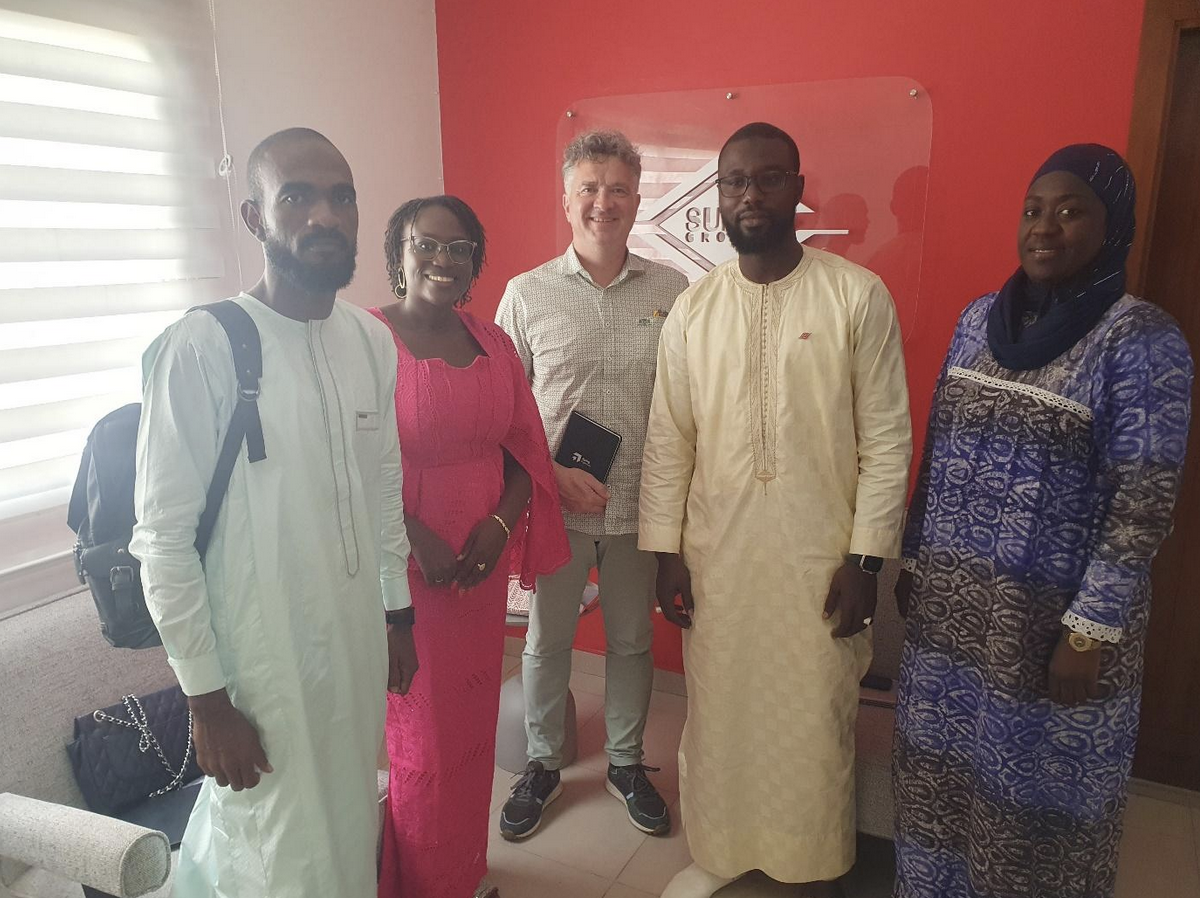
On behalf of volunteer organisation PUM, Jan Gerard Snip, director-owner of software company Sping, travelled to Senegal to provide an innovative extension to Sammanté Health’s services. Their insurance services enable disadvantaged residents in Senegal to access essential healthcare services.
Pauline Barra, CEO and co-founder of Sammanté Health in Senegal, engaged PUM for IT business development. Her request: upgrade the health voucher IT system towards a ‘Software as a Service model’ and extend the functionality of the health voucher system with Artificial Intelligence capabilities.
Jan Gerard previously travelled to Palestinian areas for PUM for a business development project. “The assignment in Senegal is to upgrade an IT system to a SaaS model and extend the functionality with AI capabilities. This ties in nicely with my previous assignment for PUM and with Sping’s ambition to revolutionise healthcare with AI.”
AI system for low literacy
Sammanté Health is a social enterprise in Senegal with a mission to address health inequalities through technology and innovative solutions. Its focus is on providing access to essential healthcare services, especially for disadvantaged populations in regions with high poverty rates. The organisation has developed a digital platform that facilitates access to healthcare through a system of online health vouchers.
“Together with client Pauline Barra, we choose to make the IT system for health vouchers more digitally automated and scalable. The functionality can be extended with an AI system so that low-literate people can also have low-threshold access.”
Jan Gerard explains the team is investigating research institutes studying AI-language models in Wolof, the local Senegalese language.
Innovation in Africa
Africa has a lot of female entrepreneurship and a culture of collaboration and openness. “Senegalese are open and friendly, which makes this mission all the more valuable,” Jan Gerard notes.
“In Senegal, especially in Dakar and Île de Gorée, the word ‘teranga’ is often used to describe a sense of hospitality, friendliness and openness. It is an important part of Senegalese culture and emphasises that everyone belongs and is treated with kindness and respect.”
Jan Gerard reflects that broadening one’s worldview through such missions provides great satisfaction in sharing knowledge with other entrepreneurs.
About PUM
PUM is a voluntary organisation that helps strengthen businesses in developing countries and emerging markets to improve people’s lives. Its aim is to contribute to the UN’s Sustainable Development Goals. PUM volunteers’ practical advice to SME entrepreneurs in over 30 countries worldwide has been highly valued for decades.