3 minutes to read
5 tips about a remote user research project with a municipality
Vanity Lam shares practical insights from conducting remote user research with the Municipality of Delft — strategies for effective interviews and project organisation.

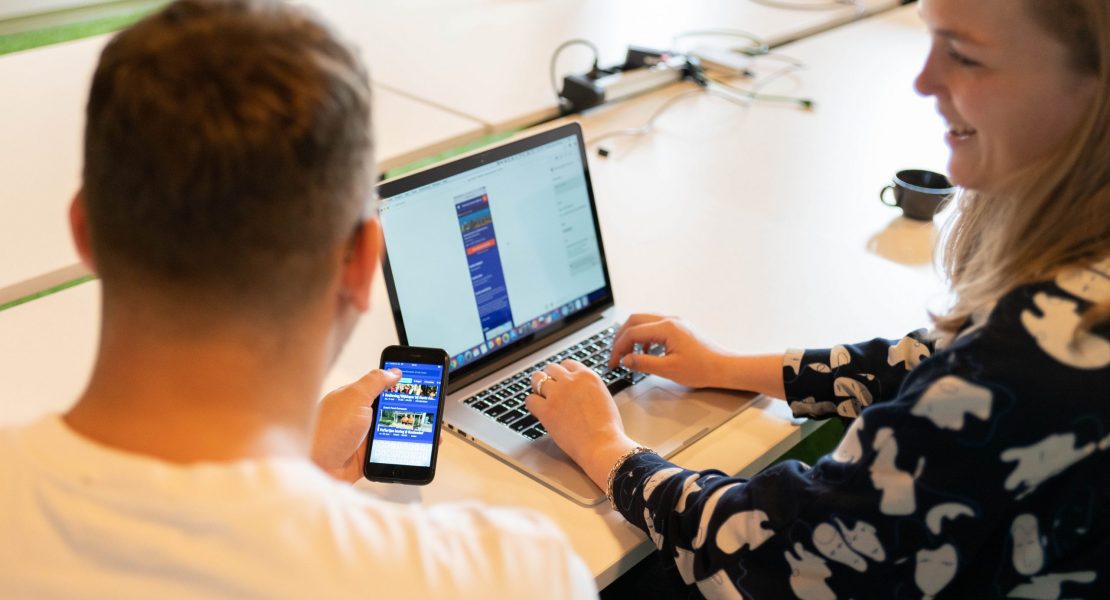
Working remotely is a challenge, but it is also great fun to collaborate with customers, users and colleagues in this way.
About the project
My name is Vanity Lam and I am studying Communication and Multimedia Design at Rotterdam University of Applied Sciences. It has always been a passion of mine to design the wishes and interests of others into interactive digital products or environments. While looking for an internship, I discovered Sping and was immediately drawn to their approach to user experience design and research.
The Municipality of Delft wanted to understand how non-Dutch speakers experience their integration process. Together with my UX team colleagues, I participated in this project and helped conduct remote user interviews. Hearing participants’ stories and designing solutions to support their integration was deeply rewarding.
5 tips from practice at the Municipality of Delft
Tip 1: Draw up specific participant profiles
To interview the right target group, create a profile outlining the various requirements participants must meet. Sometimes multiple profiles are necessary.
In our Delft project, we conducted two rounds after identifying different participant types. The first group had strong English language skills, while the second group had limited proficiency in both Dutch and English. This difference significantly influenced their experiences during the integration process.
Tip 2: Repeat the answer and ask your question more often
To collect truly relevant information, repeating answers and rephrasing questions proved essential. Since everything occurred over the telephone, we couldn’t see participants. Background noise sometimes made conversations harder to follow, making repetition even more important for clarity.
Tip 3: Create different versions of personas
During research, we created several persona versions that became increasingly concrete after each interview. Personas are fictional characters based on research data that represent the target user group. By developing personas, we better account for users’ wishes and interests throughout the project.
Tip 4: Make it visual and digital
Knowing the entire project would be remote, I developed an organized documentation approach using Miro. I created a board visualizing the design process where we noted findings, collected results, posted deliverables, and tracked planning. This maintained clarity about our progress and next steps while making our work transparent to the client.
Tip 5: Create templates
Remote sessions require thorough preparation. Preparation emails and slide presentations ensure clients understand the creative session’s purpose and goals. Templates created in advance on Miro with exercise explanations allowed everyone to view and collaborate on the board simultaneously.
Learning from both directions
I learned considerably from Sping, and my colleagues benefited from my contributions too. I introduced methods like the Six thinking hats and Frame your design challenge approach to the team.
Images