3 minutes to read
From the lab, to the street: a user test in the car
UX Designer Lot Meerman shares how Sping conducted real-world usability testing for the Ridecloud mobility app, using creative tooling and structured observation methods.
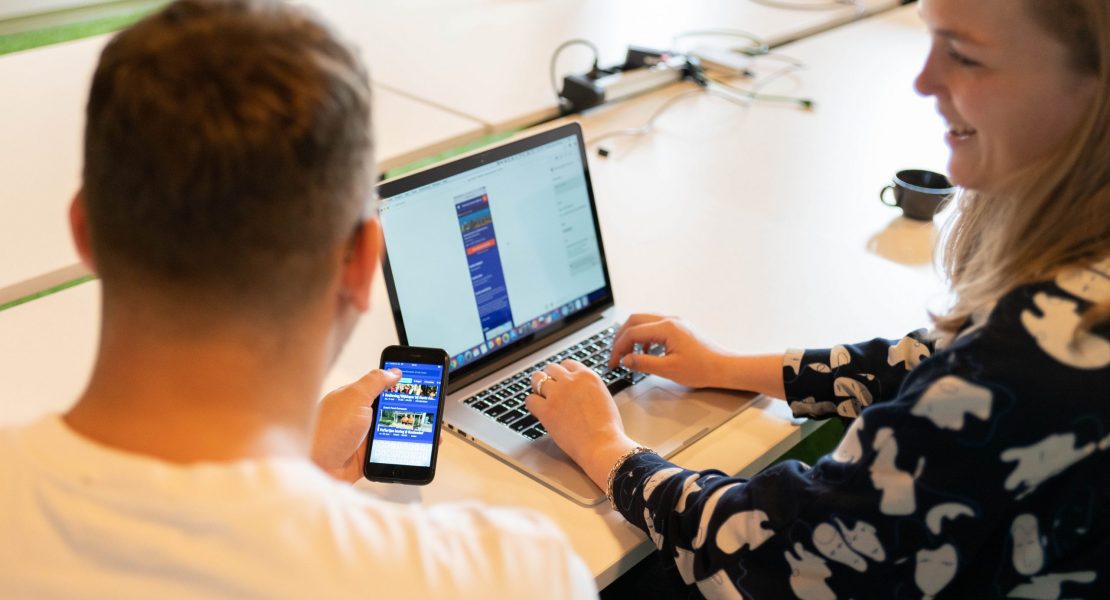
No matter what kind of digital platform you create or conceive, you never know how it will be used, which is why we regularly test our designs with end-users. Especially when the user operates the system in places where they must be able to do so safely and quickly. This case study explores an interesting usability testing project conducted for one of our clients: Ridecloud.
The issue
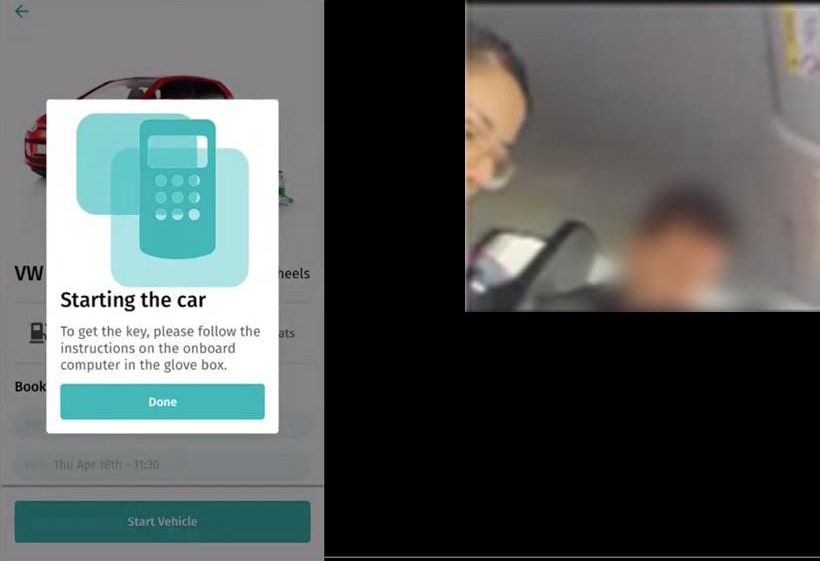
Ridecloud from Amsterdam offers a service where users can compare various mobility services such as shared cars, bikes, and scooters, and it connects them to the specific provider to offer the complete customer journey in the app. Ridecloud asked us for help in setting up and conducting a usability test to answer key questions such as: “Can the user manage to reserve a car – then drive a bit and conclude the reservation?”
In collaboration with Ridecloud, we prepared a test day where four users from the target group were evaluated. In advance, we prepared a test script and ensured that it worked through a pilot test. We also gathered the necessary facilities and made a plan for collecting and analyzing the results.
Tooling
We wanted to have a clear picture in the observation room of what was happening with the user—both their actions in the app and the precise context surrounding them. Rather than relying on expensive eye-tracking devices, we chose a smarter and more cost-effective approach.
We used video communication software Zoom, which allowed the moderator to record. The test participant was provided with a smartphone that recorded video, captured screen activity, and included audio recording. The facilitator of the usability test remained in the observation room and received all video streams from the devices.
Observations
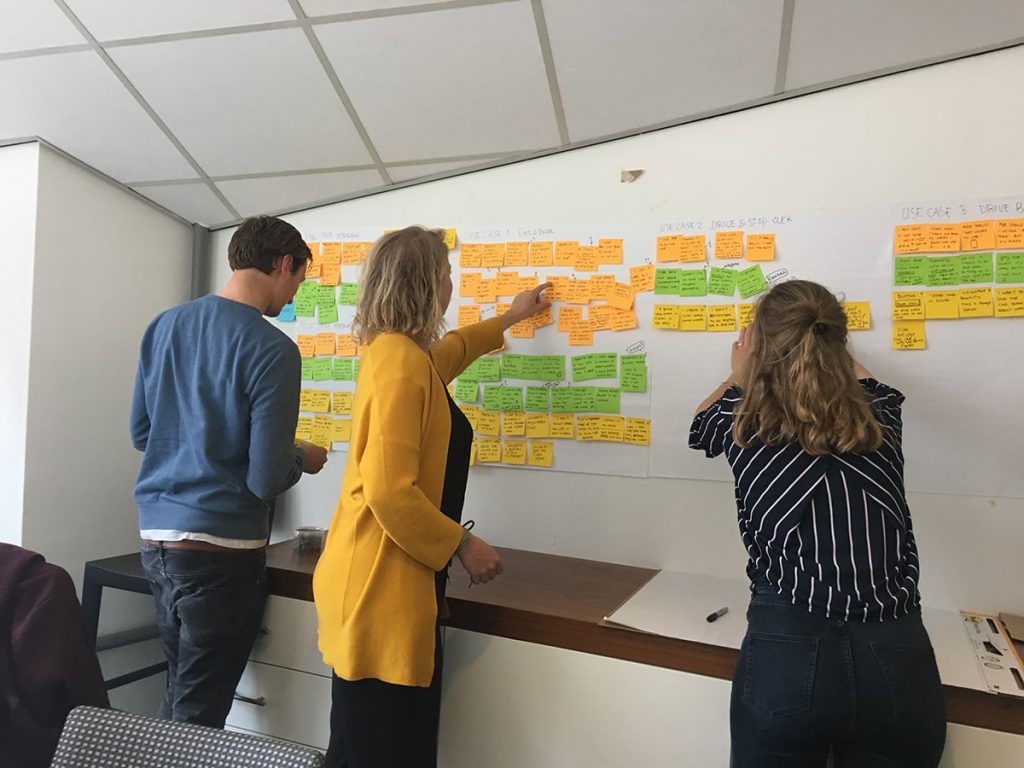
To gather insights quickly and systematically throughout the day, we documented findings in a structured manner. Prior to testing, we displayed all interview questions and test tasks on large sheets of paper on the wall. During the test, we jotted down the highlights and placed them next to the appropriate test task. We assigned each test participant a color, creating a matrix board where all highlights for each test task and participant could be easily compared at day’s end.
What we ultimately delivered
- User insights divided by feature and by user
- Recording materials (videos)
- Analysis matrix board
- List of recommendations and areas for improvement
It was a very successful test. The client learned a lot about the product and about this testing method. Multiple stakeholders were able to observe and see how their ideas were received by real users. They were eager to work on improvements.